

Francis Bacon once wrote ‘There ought to be gardens for all months in the year, in which, severally, things of beauty may be then in season.” It might be a bit much to have a garden for every month, or for every season, however that does not mean that one shouldn’t try to think about all of these periods when planning ones own.
The season of winter is the one most over looked when thinking of gardens, but it doesn’t need to be. There are a number of stunning examples of winter gardens around the country that are well worth a visit for inspiration of how clever designing with plants that look their best in winter can achieve fantastic results. We thought, however, that we would highlight a different way to add winter interest (and still throughout the rest of the year) – the garden ornament.
Originally added to gardens for rather different reasons, garden structures have the added delight of turning a perhaps rather bland winter’s vista into something quite breathtaking.
Here are our recommendations of some of the gardens around the country that are worth visiting for inspiration.
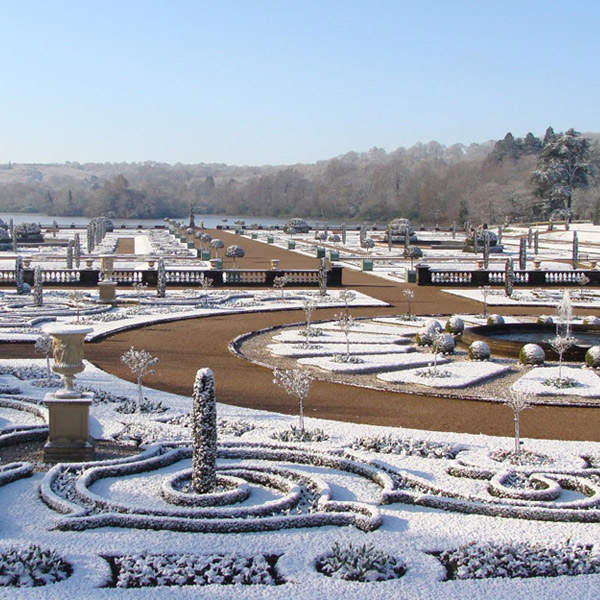
These award winning gardens are truly stunning and show a wide variety of styles.
We are particularly keen on the Italian Gardens, revived by Tom Stuart-Smith.
Image credit: The Trentham Estate
Built over a century ago, Waddesdon house and grounds were created to delight and surprise, and they are still doing so to this day. You even have the ability to explore them from the comfort of your own home if you can’t make it.
Image credit: houseandgarden.co.uk


Sissinghurst Castle gardens are among the most famous gardens in England – designated Grade I on Historic England’s register of historic parks and gardens. Bought by poet and garden designer Sackville-West in the 1930’s it was exquisitely transformed into one of the most influential gardens in the world. It is one of the earliest examples of the modern take of garden rooms.
Image credit: houseandgarden.co.uk
Brodsworth Hall and pleasure gardens were built in the 1860s and there have been only a few changes made since, giving us a perfect glimpse of Victorian life and taste. The gardens are today regarded as one of the most remarkable Victorian gardens in the country.
Image credit: houseandgarden.co.uk
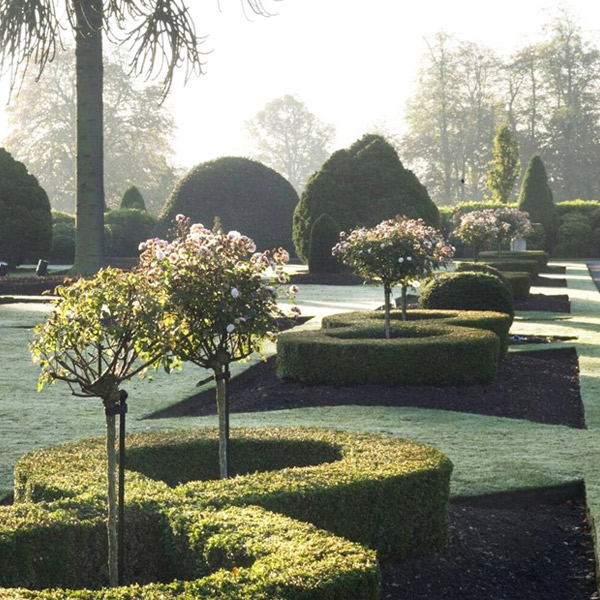
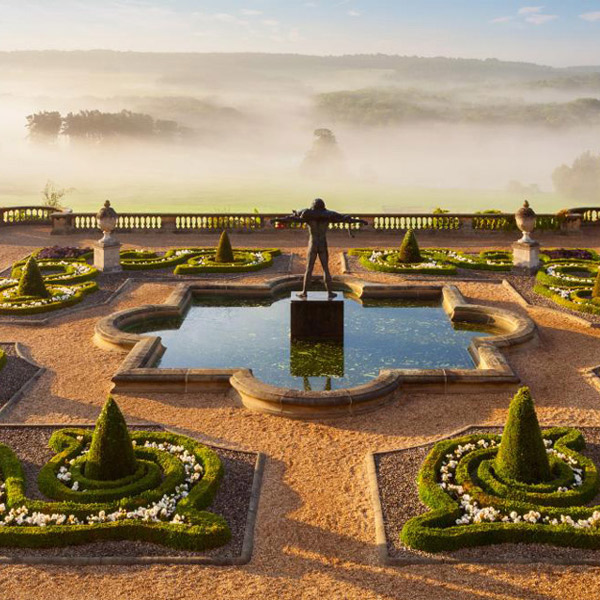
Osborne is the former holiday home of Queen Victoria and Prince Albert. Upon seeing it, one would be forgiven for thinking that they were in Italy rather than the Isle of Wight, due to its incredible Italian Renaissance palazzo styling. Although a palace, it was a place that the royal family could be away from public gaze and enjoy private family life. This makes the gardens a wonderful example of how one can have grandeur and opulence, but still retain comfort and serenity.
Image credit: The Times
Once a lavish party house, Witley Court now stands in ruin due to a disastrous fire in 1937, destroying one of England’s greatest houses. Thankfully the gardens were not affected by the fire and so are still an incredible example of this lifestyle.
Image credit: news.cision.com

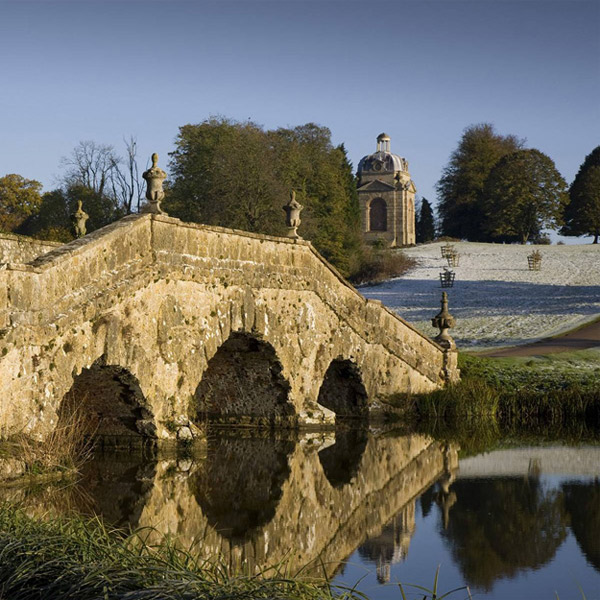
Is there an example of a grander Eighteenth-century Georgian landscape?. Designed in a time when impressive vistas and rolling expanses of ground were the main focus – garden structures and buildings were used not just to create pretty scenes but also to tell tales and make political or religious statement. One may not quite want to perhaps take it that extent, but that doesn’t mean one can’t be inspired by the clever planning of paths and layout that entice you to certain cleverly designed views and intricacies.
Image credit: houseandgarden.co.uk
Set over 2650 acres, there aren’t many examples where a garden is more famous (world wide even) than the stately home itself. Inspired by the great landscapes of Seventeenth Century painters, this garden takes garden structures to a completely different level, or should we say scale, with actual temples and pantheons to name a few. It is a fantastic example of how one can cleverly manipulate your landscape to create the views that you want, and how the structures and ornaments can then blend perfectly within.
Image credit: The Royal Oak Foundation
